
#2 - MAY 2024

Interview: “Women are not a problem”
She is VP Diversity & Inclusion (D&I) with one of France’s most male-dominated international companies. Béatrice Chavanel has made the integration of women one of Renault Group’s priorities. To change the group “for the better”.
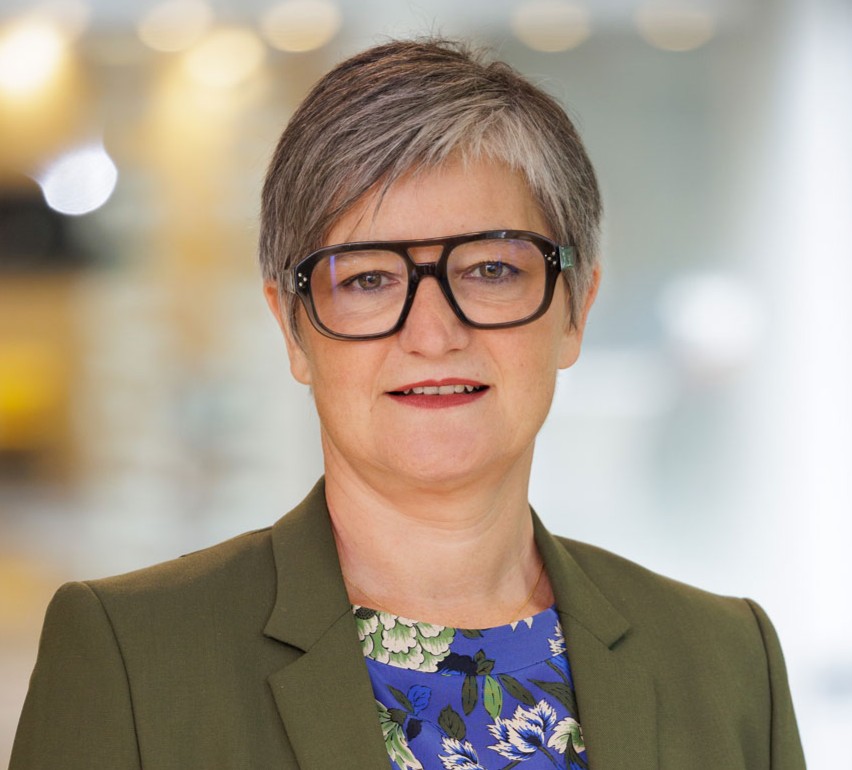
Béatrice Chavanel
Director of Transformation, Marketing and Communication, Renault Group
“A real
approach to
transformation”
Feminising a company as masculine as Renault Group is something of a revolution…
It’s part of an approach aimed at real transformation. Almost 80% of Renault Group employees are men. So it’s clear that moving from 80% to 50-50 means overhauling our entire approach. It’s also interesting that this comes at a time when the group is reinventing itself, particularly with the ecological transition.
To achieve this, what is the main message you’re trying to get across internally?
It involves a far-reaching message on gender diversity in all the teams, everywhere, underpinning a long-term approach. It’s not a fad: it’s a matter of conviction. But then we have to be careful; it’s fine to have ambitions, but we’re talking about people – women in this case. So as well as recruiting them, we need to do everything in our power to make sure they are properly integrated. With some jobs, feminisation is easy. With others, like engineering, industry and IT, it can be more complex. To ensure successful integration, and going beyond our zero tolerance policy regarding discrimination throughout the group, we have relaunched the affinity network for women in the group, and we can also provide support or dedicated programmes. In addition, all the group’s employees have been trained in cognitive biases.
Aren’t you meeting any resistance abroad?
Well, it’s obviously different talking about D&I KPIs in India or Spain. But D&I commitments are an intrinsic part of the group’s DNA. I use this to remind the most recalcitrant people that the group’s diversity and inclusion policy is not optional or up to each individual. But of course, you still need to take the time to answer their questions and explain what it’s all about. Once the goals are set, everyone can focus on potential solutions for achieving them, rather than trying to challenge them.
Don’t you have to adapt your goals with different countries?
There are very few adaptations to KPIs in terms of countries, because the difficulties raised depend more on the business lines, which are very similar in all our countries. And of course, as all the KPIs, processes and joint projects are deployed by the countries, they are totally free to implement specific actions in relation to their level of D&I maturity.