
#2 - MAY 2024

PORTRAIT : Catherine Petit, An unbridled dark horse
As a reserved girl who received little encouragement, Catherine Petit seemed an unlikely candidate for thinking big. But in every country she has passed over, her love of challenges has propelled this intriguing “flying saucer” (or “flying sorceress”, rather) to the heights.
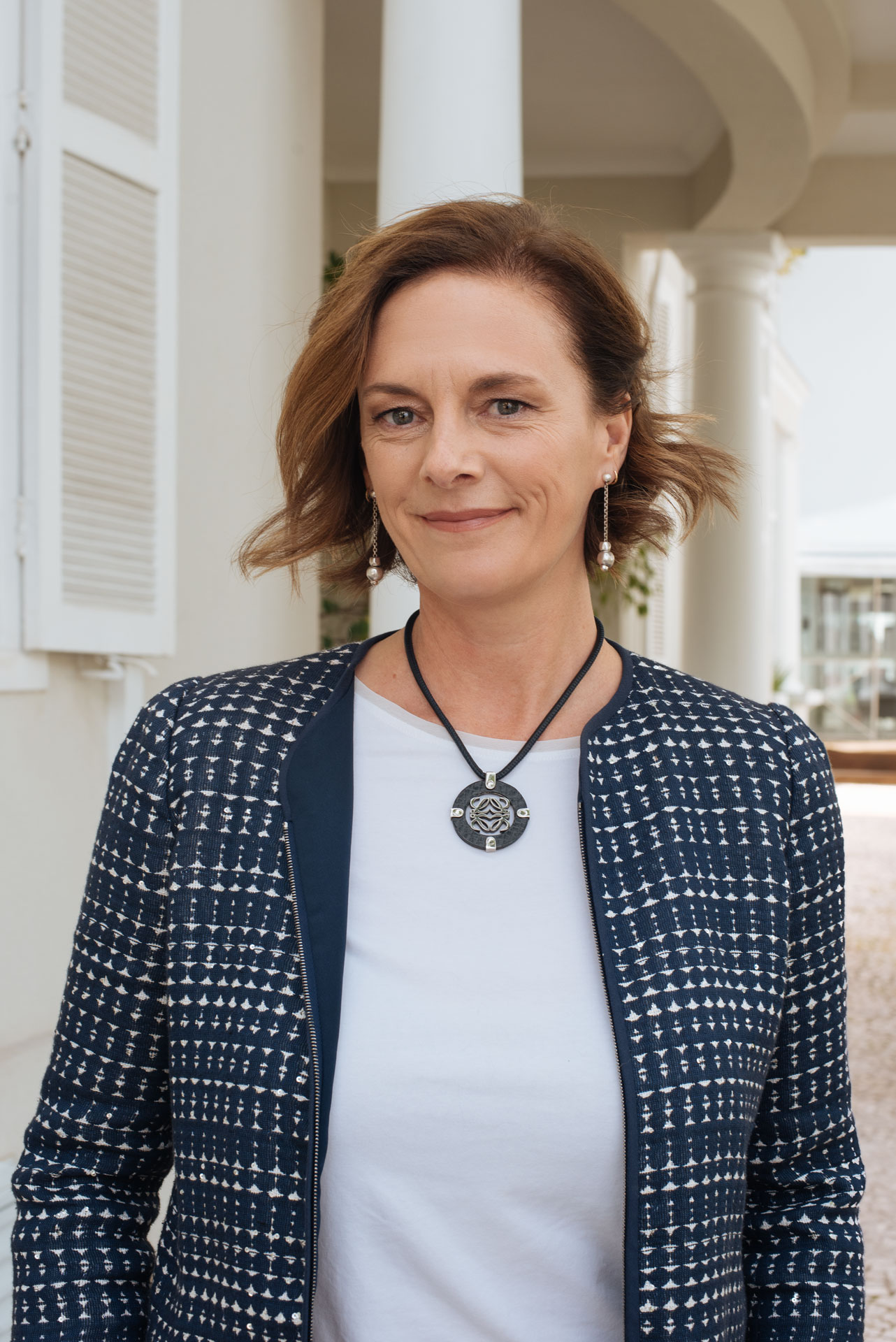
Catherine Petit
Managing Director, Moët Hennessy Brazil
This is the story of a woman whom nobody dreamed would get so far. “My brother was the one who had to study, the one who had to succeed. So, of course, my parents were very proud of me, but when we learned I’d been admitted to the ESCP business school, the first thing my father told my mother to do was go and check, Petit being a common name,” reminisces the current CEO of Moët-Hennessy Brazil. After her graduation, the Toulouse native saw a lot of the country and several levels of misogyny.
“After a year in auditing at Arthur Andersen, Lyonnaise des Eaux was offered an opportunity to go on assignment to Casablanca. I applied immediately. The main requirement was to be single. But I was told “no, that won’t be possible.” So I asked why and was told it was because I was a woman!” She jokes about it today, but that answer did not go down well with her. A few days later, she set off for Morocco. “I didn’t sense the slightest discrimination. I was a European woman, but with them religion took precedence over gender.”
“An animal of intense zoological interest”
Quite the opposite of Argentina: “the most macho society” she has ever experienced. “Most women have a job for a year or two until they find a husband, then they stop working to bring up their children and run the household. So of course, I seemed like a total alien.” She was soon hired in Brazil, where “a lot of women hold executive positions.” Laid off by AGF following a takeover, she moved to Rio, where Pernod-Ricard welcomed her with open arms. They offered her Montreal but she “found the climate too harsh.” This was the start of her adventure with Moët-Hennessy. In 2016, she was put in charge of a region encompassing North and Central Africa and the Middle East. For the first time, she was “involved in coaching for a small group of women to develop her career.” She then returned to Brazil, which she “missed a lot.” This was in the midst of the Covid crisis and she had to “manage the company on Zoom” from her hotel. She had to lay off staff and became known as “the cleaner”, but by the second year the results were tangible, and “France was beginning to wonder what was going on” in Brazil. “Last year, I had a visit from Moët-Hennessy’s entire top management team,” she says, visibly still astonished.
When she got to Brazil, she was “an animal of intense zoological interest: a lot of customers wanted to meet me because, for them, a woman boss in the wine and spirits sector was something completely absurd. Even today, I feel they’re rather fascinated,” she says with a deprecating smile. “They say to themselves: “How could this company entrust this job to a woman? I was familiar with Brazilian society and I knew it would be a challenge. When I go out to lunch with my team, the waiters systematically give the bill to my sales manager because he’s a man, whereas it’s always the most senior manager who pays it.”
Petit by name; big achiever by nature
If the Franco-British woman has never flinched in the midst of all these men, it’s perhaps because women always had her back. “When my first coach asked me what I was doing, I happily boasted that I had just been appointed CEO for Africa. She said, “Well, that’s good, but then what?” She must have seen how flabbergasted I was, and she looked at me and said, “So you’ve got a bit of work to do!” We worked on it, and I told her that my dream was to become CEO in Brazil, but I didn’t really believe I could. She said, ”You don’t know that. Plan your career around it.”If the Franco-British woman has never flinched in the midst of all these men, it’s perhaps because women always had her back. “When my first coach asked me what I was doing, I happily boasted that I had just been appointed CEO for Africa. She said, “Well, that’s good, but then what?” She must have seen how flabbergasted I was, and she looked at me and said, “So you’ve got a bit of work to do!” We worked on it, and I told her that my dream was to become CEO in Brazil, but I didn’t really believe I could. She said, ”You don’t know that. Plan your career around it.”
Though she had long nurtured a secret ambition, Catherine Petit refused to change in order to achieve it. “From the outset, I decided to do things my way.” She lets her teams do the communicating; she doesn’t enjoy it and “it puts others in the spotlight.” Her style of leadership is not based on anyone’s else’s; it is authentic, and never prevents her from acting boldly. This unobtrusive woman was the one who “broke the baronies” when she arrived in Brazil, and spoke directly to trainees rather than “the managers who had been there for 20 years.” In Brazil, she found her true field of expression: “Here, it’s all about emotion. Why not express it if you can manage to do that while keeping a cool head and making decisions?”