
#4 - APRIL 2025


Could you do without a chief geopolitical risks officer ?
The geopolitical context, which weighs heavily on organisations, raises the question of the role of a geopolitical expert right at the heart of international companies.
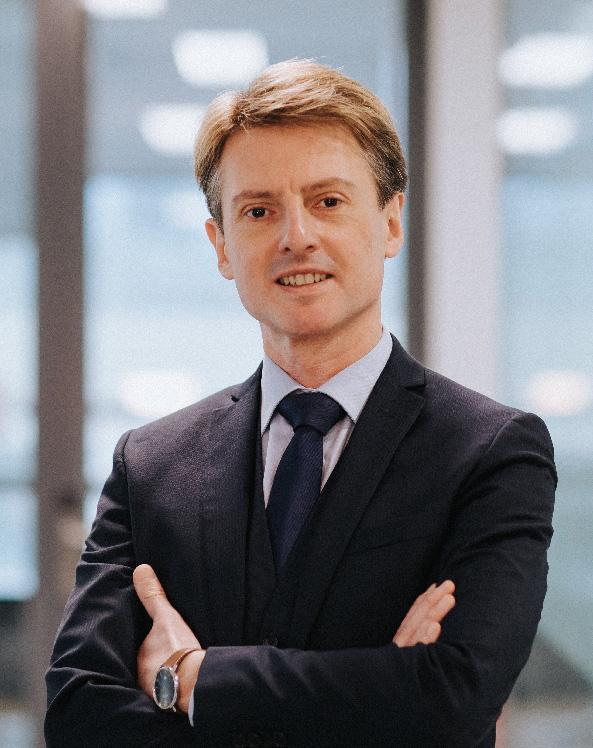
By Frédéric Munier
Director of the School of Geopolitics for Business
SKEMA Business School
In his recent book, Bienvenue en économie de guerre (Welcome to the War Economy), David Baverez argues for the creation of a Chief Geopolitical Risks Officer position within organisations; in brief, someone who understands geopolitics from a business perspective. A post like this would have been unthinkable only a few years ago. This is because the hyperglobalisation of the 1990s and 2000s, contemporary with the end of the Cold War, unfolded within a relatively stable international system guaranteed by the American hyperpower. In this context, companies had no reason to worry about the conditions or even the political and geopolitical limitations of their access to markets. This enabled them to break down their value chains according to the economic advantages offered by each country, as Richard Baldwin clearly demonstrated in The Great Convergence.
This global stability is now challenged by the very forces of globalisation. The integration of formerly poor countries into value chains – China in particular springs to mind – led to the widespread emergence of new economies. This economic boom led to political unrest, with people questioning the international order that came out of World War II, considered too Western-centric. Today, the de-Westernisation of the world is a leitmotiv in the countries of the Global South, which now have economic clout the Third World did not possess in its day.
In a world now on the brink of a “Cold War II”, where Europe is once again experiencing war, autocracies are challenging the Western order, democracy is in retreat and Donald Trump considers “tariff” to be the most beautiful word in the dictionary, geopolitics is becoming increasingly significant at all levels. International tensions are worsening, directly affecting trade and finance flows. In 2024, the BRICS group accounted for 35% of global GDP, ahead of the G7 countries, which totalled no more than 30%. Suffice it to say that the world has undergone a genuine revolution in the etymological sense of the term.The second factor is the decline of American power and leadership, as evidenced in its own way by the election of Donald Trump. The US president has engaged in a standoff with China, considered a geopolitical threat.
The second factor is the decline of American power and leadership, as evidenced in its own way by the election of Donald Trump. The US president has engaged in a standoff with China, considered a geopolitical threat.
Companies need to know how to navigate this new world. This is why McKinsey has set up a “Geopolitical Risk Unit”, Lazard has launched a “Geopolitical Advisory Team,” and the Boston Consulting Group (BCG) has partnered with the Institute for Management Development (IMD) to develop a “geopolitical radar.” Meanwhile, SKEMA Business School has set up a “School of Geopolitics” and a “Global Risks” centre to arm its students and turn them into “augmented managers” capable of responding to the changes imposed on their organisations by this new environment.