
#4 - APRIL 2025


Copernic in Business : subjects, arise !
What if a company were a democracy?
Since the late 1980s, organisations have been moving towards more distributed models, from which “subjects” are emerging.
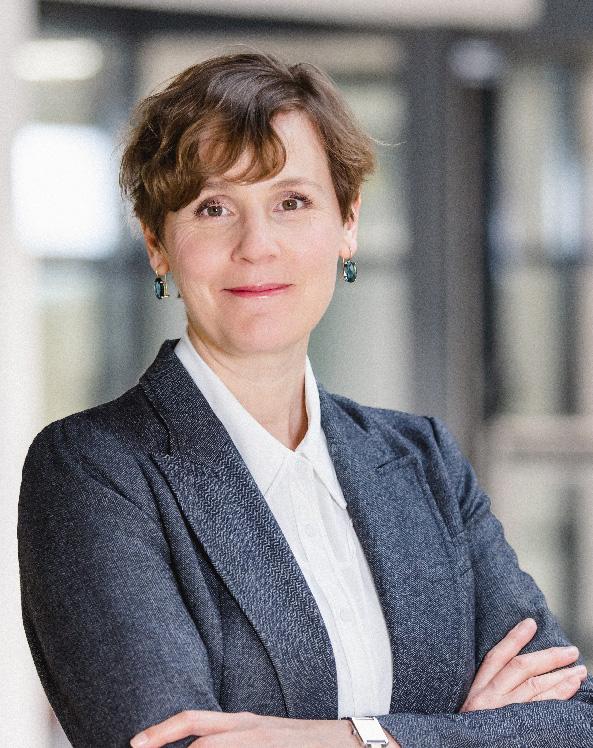
By Sophie Botte
Professor of Management
SKEMA Business School
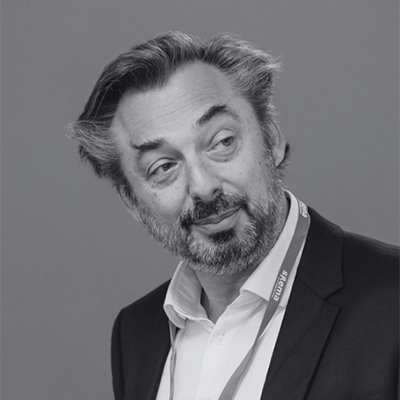
And Fabien Seraidarian
Director of Knowledge Transfer and of Director of the Global Executive MBA, SKEMA Business School
Interest in the development of new work organisations, management frameworks and production methods has marked recent economic history since the late 19th century. However, in the 1980s, things began to gain momentum. Various management trends (Midler, C., 1986, Abrahamson, E., 1986, Abrahamson and Fairchild, 1999) attracted companies that then embarked on large-scale projects to transform organisational models and introduce new practices – with varying degrees of success.
UNCOUPLING SUBORDINATION
Echoing the questions raised by contemporary companies denouncing bureaucracy, the sluggishness created by hierarchy or the lack of agility, organisational theories are debating alternative forms of organisation. These seek to combine business logic with democratic logic and to find balances that prove unstable: “there is a theory that organisations prioritising economic gains must lean more towards hierarchy and structure, while prioritising social values means promoting democracy, decentralisation and personal relationships.” (Pohler, 2022).
In the 1970s, various participatory and self-organising models had already begun to emerge. In 1985, Robert Dahl suggested extending democratic principles to economic structures, considering that the practices resulting from them increased the organisation’s value. The organisation’s structure and management, based on a non-hierarchical, non-bureaucratic model, are seeking to do away with relationships of subordination. The attitudes and roles of managers are being re-evaluated, sometimes even leading to their being appointed democratically. Lastly, employees’ independence in their activities calls for a redefinition of working conditions, monitoring and even goal-setting, and the implementation of actions for personal development.
A SUBJECT THAT CHANGES EVERYTHING
Inspired by the holacratic model or sociocracies, experiments are developing, shaping an organisational framework that seeks to reconcile economic issues with the quest for meaning, autonomy and involvement in corporate strategy and governance. However, the reality is harsh, and few organisations are capable of sustaining such an ambition. Several ways to avoid falling into the “degeneration trap” are suggested: limiting the division of labour and specialisation; developing experience through a variety of roles and thus limiting organisational differentiation; promoting distributed leadership, or developing forms of management control and, more broadly, social control.
Beyond that, the development of specific competences at individual level to support the underlying principles is becoming a key issue. Employees need to develop cognitive abilities (mindset, theoretical concepts, practical methods) and an experience of autonomy and democratic governance practices (Diefenbach, 2019). The aim is to promote a culture and a learning environment enabling members of the organisation to express themselves, engage in dialogue and be reflexive as regards practices.
These practices are not self-evident. They require a profound transformation in each member of the organisation. In terms of relationships with the company, with the group, with authority and responsibility and even with oneself, entire aspects of a person’s identity can be called into question. The “actors” become “subjects”, and it is as such that they will, or will not, become involved in company dynamics. It is often on this condition that a climate of listening and collective intelligence can be established.
THE JOURNEY IS THE GOAL
Leadership training in the broadest sense is crucial in assisting this movement. Firstly, teams and leaders must be encouraged to support and respect individual questioning while fostering the group dynamic. Secondly, ethical issues and respect for each individual’s pace and limitations are crucial to a successful transformation. As regards the “liberation” of organisations, more than with any other aspect, the path taken must reflect the goal pursued.
By following this narrow, unstable path, alternative organisations can help all their members participate fully in decision-making processes – participation being essential to a more open and democratic social system (Bachrach and Botwinick, 1992; Dahl, 1971). The organisation can then become a space of personal development for individuals who are fully empowered “subjects” committed to transformative projects.