#4 - APRIL 2025


Suez: dealing with time and reality
Since Veolia’s takeover bid, the French water and waste treatment specialist has had to undergo a rapid cultural transformation.
In 2022, Suez unveiled a strategy for its rebirth, after Véolia acquired part of its activities. This situation involves rethinking the raison d’être, clarifying strategic orientations and recreating a shared destiny with all the employ ees and stakeholders. It means that a forced transformation is required, but the old saying reminds us that “while work is in progress, sales continue”: the transformation work must produce prompt results in an intense and booming competitive environment. Refocusing on water and waste activities has gone hand in hand with considerable investment, acquisitions and a dynamic international growth
strategy.
This strategy involves building an organisation and drawing on strate gic capabilities. The transformation of Suez is being driven by a number of factors. Developing competences and leadership is key to furthering this ambition and engaging employees. This is the meaning of the various pillars of the new leadership model.
THE RELATIONSHIP WITH TIME
In this race now underway, the rela tionship with time is critical. Firstly, because the transformation is needed to reset Suez’s development and involves formalising objectives – i.e. defining milestones and committing to accountability. Secondly, because time is not linear, and in addition to day-to-day management, there are various other projects, including developing leadership to meet ambitions for growth. The complexity of the transformation in progress at Suez lies in making the different dynamics at work – research and development, investments and efforts for growth – converge with the social model and the leadership of the teams. According to Norbert Elias (On Time, 1996), time is not only a tracking device for getting synchronised, but also a way of experiencing duration, and the relationship with time makes us aware of the com plexity of change. Developing leadership is especially important in the long term in an environment where immediacy is valued. Hartmut Rosa (Social Acceleration: A New Theory of Modernity, English version: 2013) reminds us that acceleration is a major marker of our contemporary societies. In his view, we live in what can be described as late modernity, in which the speed of social change is reaching an intragenerational pace. Time is the product of a social construct within a company and can become a source of conflict, especially in the context of a complex transformation. Delphine Batiot, Talent Director at Suez (see below), concurs in this respect.
DEALING WITH REALITY
The strategic guidelines outline Suez’s development plans and are based on explicit or more implicit assumptions. On a daily basis, dealing with reality means revising intentions and goals in order to adjust, arbitrate and provide the necessary support and resources.
And in the long run, create an organ isation that learns. Environmental change makes strategy an organisational phenomenon (H. Mintzberg, 1999): the ability to lead transformations and implement them becomes crucial. Companies have become more efficient by developing new practices. The introduction of a transformation office is essential for managing large scale transformations. At operational level, this entails providing support to teams, enabling access to resources, and coordinating actions; at the strategic level, it means promoting a systemic view of the organisation. Support for employees is no longer limited to training, but is a long-term commitment. And careers are more closely aligned with the company’s transformation challenges. Confronting reality makes the transformation more tangible in employees’ experience.
SUEZ
A NEW LEADERSHIP MODEL
FOR CHANGING THE CULTURE
In a rapidly changing environmental services market, the French water and waste management specialist is accelerating its transformation. To this end, it has adopted a new leadership model to support the roll-out of its strategy.
For the past three years, Suez, the water and waste management specialist, has been accelerating its transformation. To quote Delphine Batiot, its Talent Director: “We are carrying out transformations in a sector that is itself undergoing significant change.
One example in the sphere of waste is that we have collectively moved from a landfill to a recovery approach, transforming waste into new materials or energy.” This makes the dynamic of change at work within the company palpable. Since 2022, the Group has new shareholders and a new strategy. “Our strategy sets a clear course: becoming the trusted partner for circular solutions in water and waste,” says Delphine Batiot. “To implement it, we have evolved our operating model and organisation, refocusing on our two core businesses: water and waste.”
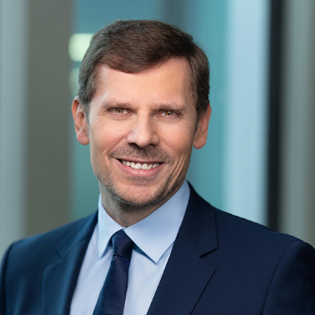
« No matter how good a strategy is, success is not a given if the organisational culture is not aligned with it. »
Laurent-Guillaume Guerra,
Human Resources Director
& Health and Safety Director
FOUR PILLARS FOR CHANGING THE CULTURE
On the agenda for SUEZ’s cultural transformation: a new leadership model. “It offers a common set of values to inspire everyone within the company and help develop the Group’s culture,” says Laurent-Guillaume Guerra, Human Resources Director and Health and Safety Director. This model is based on four pillars:
Building the future
“With this pillar, we wanted to encourage behaviour that makes our customers central to our actions, by not only anticipating their needs but also promoting sustainable development practices,” says Delphine Batiot.
Converting the try
“Our special capacity lies in flawlessly fulfilling our commitments; we say what we do, and do what we say.”
Working together to go ever further
“This emphasises collaboration, which is a catalyst for success.”
Unlocking everyone’s talents
“This stresses the concept of care and the importance of helping all the company’s employees to grow.”
EXCELLENCE AS A DRIVING FORCE
To successfully roll out these cultural changes, the Group has advanced one step at a time. Firstly, by conducting a management survey with a panel of 8,000 executives: “We asked them to evaluate various behaviours in their manager. This served as a kind of benchmark – a starting point from which we could define the priorities we needed to work on “collectively”. Then we carried out a 360° assessment, based on our leadership model, of all our 250-odd senior managers. With help from a coach, everyone was able to draw up an individual development plan. Our view is that the change owners are the managers.”
The Group’s new leadership model structures all the company’s HR processes, from recruitment and talent development to performance evaluation. It provides a common reference point for all employees, regardless of their position in the company.
MEASURING CULTURAL CHANGE
How a change in mindset, habits and behaviour be brought about? “With other types of transformation, there are very clear indicators that can be defined and measured, like financial indicators. When it comes to the human aspect, it’s a little trickier,” says Delphine Batiot. Suez relies heavily on its tradition of internal surveys, because they bring what is not normally seen to the surface, but as its Talent Director knows: “Measurement is a key area. We’re also planning a second managerial survey at the end of 2025 to assess the impact of the action plans rolled out since 2024.”
A CONTINUOUS PROCESS
Suez’s cultural transformation is not yet complete. As it moves forward, questions arise, and shape it in turn. “These behaviours apply to everyone,” says the Group’s magazine, but “each individual must take ownership of them.” An illustration is suggested: “I am an operations manager: what does being customer-focused or leading by example mean to me?” “Everyone needs to understand what this means in practical terms in their daily lives. And that takes time,” says Delphine Batiot.
Because a cultural transformation is a long-term process. Once the strategy is in place, it has to be communicated, understood, disseminated and embraced by everyone. But time is
not always perceived in the same way. “This is one of the challenges of transformation,” says Delphine Batiot. “Finding the right pace between those who want to move more quickly and those for whom it is already too fast. This timing issue is crucial, to get as many people as possible on board with the change and ensure the success of our strategy.”
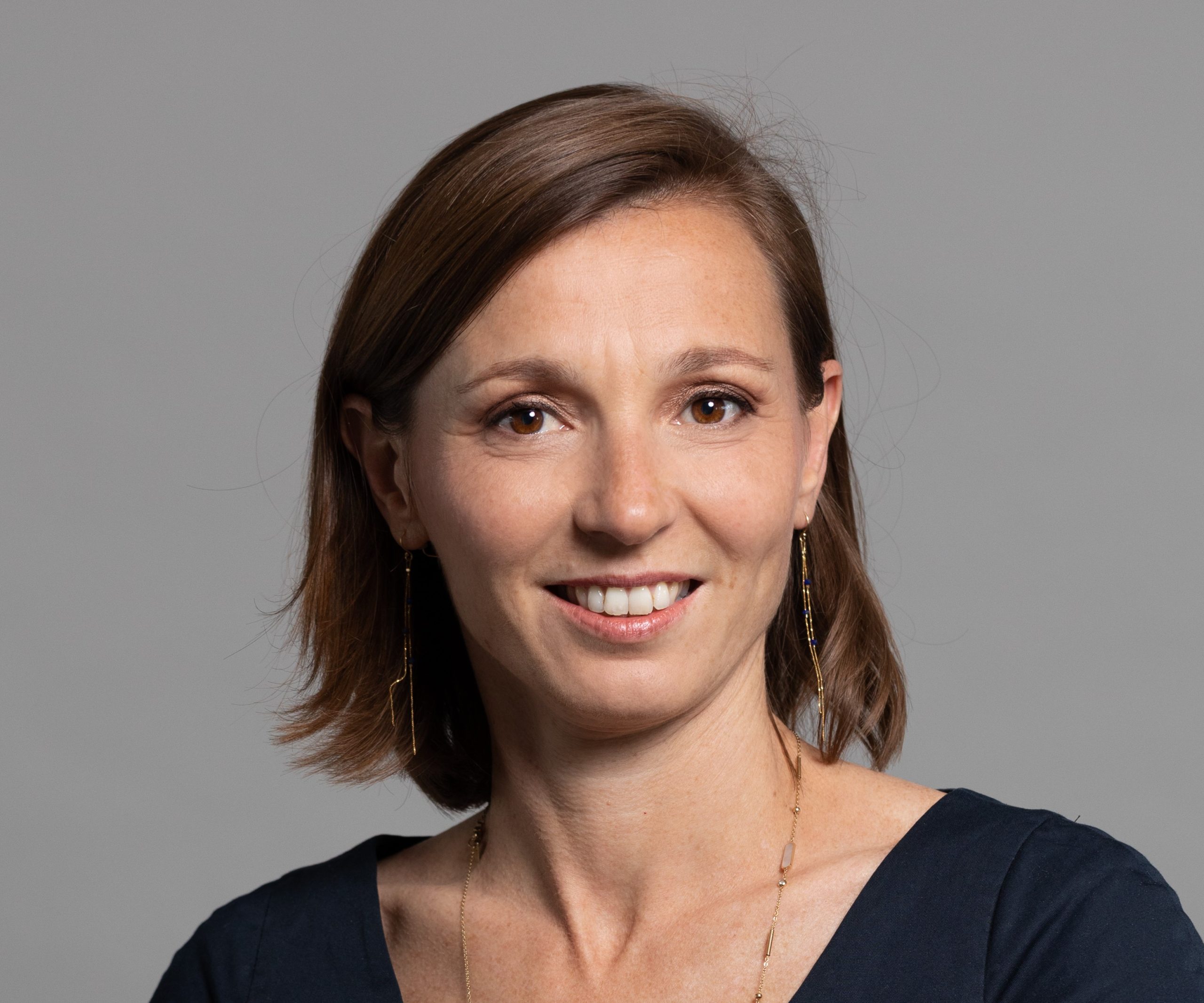
« Transformation must not remain a concept for senior management: employees must be able to measure its impact on their jobs. »
Delphine Batiot,
Global Head of Talent,
Senior Vice-President
40,000
employees
40
countries
8,9
BN
in turnover in 2023
57
million
people worldwide with access to clean drinking water
over
36
million people benefiting from our sanitation services
7.7
TWH
of energy produced from waste and wastewater