#6 - JUNE 2026




Yann Manbrini: “We shouldn’t try to teach AI too much”
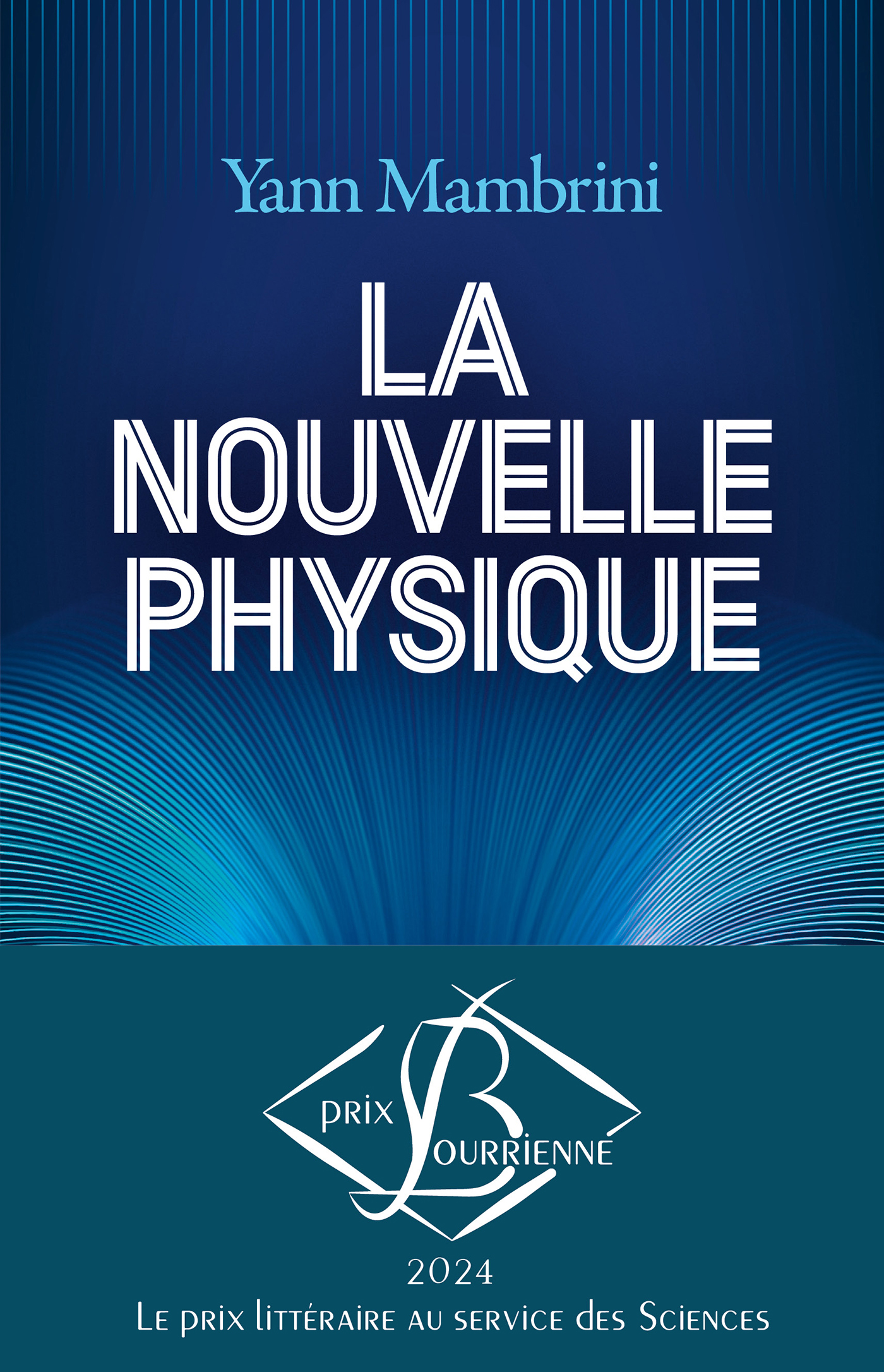
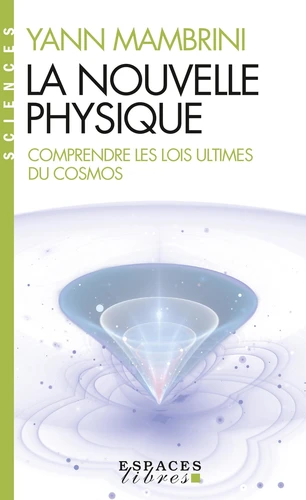
He explores the origins of the universe and the depths of a top hat. Yann Mambrini, Research Director at CNRS, is both a theoretical physicist… and a magician! The author of several popular science books, including “La Nouvelle Physique” (Albin Michel, 2024), he provides insights into expertise, AI and the expertise of AI. With a perspective and poetic flair rarely found elsewhere…
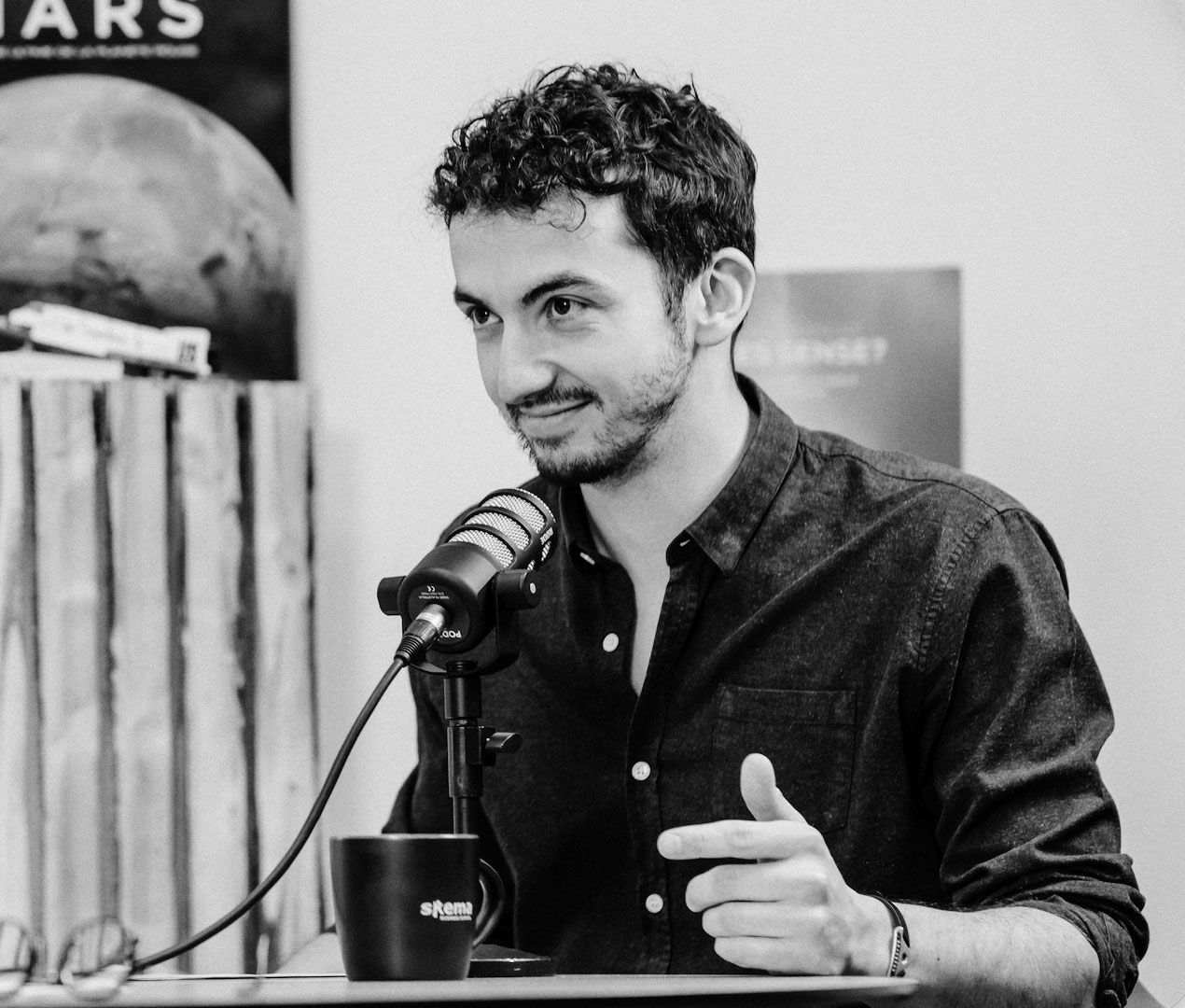
Interview by Kevin Erkeletyan
As a theoretical physicist, how do you use AI?
I don’t use it. Not directly. It was experimental physics, not theoretical physics, that led the way in this field. The first neural networks, the foundation of AI, were adopted by the CERN* in the late 1980s. In particle physics, the number of collisions rose from 10 to 500 million per second. It was then no longer possible for human beings to study them. The machine was trained using the latest findings in physics so that it could alert us to even the tiniest anomaly. But in 99.9% of cases, it was a computer glitch. Others attempted to apply it to the field of astronomy. They told the machine: here’s a map of the sky; if you spot anything that isn’t on it, send us an image and we’ll check it. Up to that point, the use of AI was justified, but over the last five or ten years, some physicists have been trying to apply it to theoretical models.
*European Organisation for Nuclear Research
Was that a mistake?
In my view, yes. It is highly questionable. Some researchers developed AI modules to determine which theory is the most likely. In string theory, for example, certain parameters are not observable and thus unknown. So they used the “Bayesian” method, which involves assigning a prior probability to a theory, to instruct the AI that it was more probable for nature to be encompassed within one set of parameters rather than another. But nature is a point: we have nature, we have the universe, we have physics, and therefore a law. Nature doesn’t care about probability. Nature dictates the law. It is the supreme judge. It is arrogant to apply AI to theoretical models.
Is there no middle ground possible between experimental physics and theoretical physics?
Yes, in phenomenology. In physics, it is the discipline that bridges the gap between theory and experiment. AI can then be used to put theory into practice more quickly. As the universe is expanding, constant recalculation is needed to simulate the theory’s predictions. AI learns typical trajectories and eliminates the need for certain calculations, shortening the process from two months to two days.
What lessons can we learn from its use?
We shouldn’t try to teach the machine too much. We have to allow it a touch of crazy. That’s the essence of research and art – otherwise it’s biased. If it’s told too often to go in one direction, it won’t bother trying to go in another. While carrying out some research, we noticed that after a certain number of instructions, it started doing all sorts of things. It’s much the same learning curve as with the human brain. In a sense, it is also affected by the Dunning-Kruger effect: the less competent you are in a particular field, the more confident you are. When you start learning something, there’s a phase where you feel incredibly competent, and the more you learn, the more that belief in your abilities wanes.
Could an AI ever win a Nobel Prize?
To make a discovery, you need a combination of structure and crazy. A discovery happens outside the box. And once that happens, you have to put it in a different box. A researcher who makes a discovery is a kind of poet; it’s linked to their history, the people they’ve met, their past, their childhood, their religious beliefs. Einstein could make his own discovery because he had a different view of the universe from his neighbour. For AI to make a discovery, it would require a comparison of AI systems that have had different “lives”. Perhaps a form of creation might be achieved…
You are the author of several popular science books, including “Newton à la plage” and “La Nouvelle Physique”. Do you have to be a real expert to get things across to the general public?
Yes, you need to be a real expert to be a good communicator, but a real expert isn’t necessarily good at getting things across. When a layperson asks you a question, they’re usually asking something that’s outside the scope of the topic. So you really need to know your context to provide an answer.
We have to allow the machine a touch of crazy. That’s the essence of research and art.
There are some unreliable experts who are excellent communicators, but often struggle to come up with an answer when asked a question they aren’t expecting. They manage to wriggle out of it, until they come across someone who won’t give up… Conversely, some experts are very bad at explaining things to the general public. They’re often experts who are too expert. If you’re too good at something, you don’t understand the pitfalls people can fall into.
Magic is an intrinsically human experience. Actual eyes need to see actual hands.
When trying to get from point A to point C, the unwary can stumble into a hole. If you fly too high, you won’t see these pitfalls. But if you’ve already fallen into the hole yourself, you know why others do it too. I have a colleague who is such an expert in string theory that even his students don’t understand him. To him, though, it all seems perfectly obvious. I’ve actually fallen into quite a few holes myself.
You mentioned poetry: to what extent do factors other than expertise – like instinct – play a part in a physicist’s thinking and judgement?
Ask a hundred physicists a question, and you’ll get a hundred different answers. For me, instinct is paramount. I am a theoretical physicist, not a mathematician. I imagine the equations; I imagine what would happen if I were there when the universe began: the particles all around me, the intense heat, how they would interact with me. I sometimes ask my students to close their eyes and tell me what they feel. You need to sense where an equation is heading and realise if it’s going nowhere and that there’s no point wasting a month trying to solve it. That takes instinct. And instinct can be mastered; it’s a series of events, failures and successes.
So instinct is a form of expertise.
Yes, a particular kind of expertise.
Is it conceivable that AI could have an instinct, or might eventually develop one?
Absolutely. Teaching AI is like giving it a kind of instinct. Instinctively, it knows it’s better for it to go one way rather than another. That doesn’t mean it will be in the right direction. Take the survival instinct, for instance: to escape from a lion, you might run straight towards some hyenas. Instinct involves learning about probabilities.
Our relationship with AI is also one of differentiation, of seeking to set ourselves apart from it. You have written about time, a subject already made accessible to the general public by Stephen Hawking. How do you stand out from Stephen Hawking?
In pure physics, following in Hawking’s footsteps is quite a challenge. He was a colossus. But I don’t think Hawking was actually that good at explaining things to the general public. His book is sometimes very difficult to understand. I’m not sure whether the people who say they’ve read it have truly read it. Perhaps he was too much of an expert. In this respect, I prefer Steven Weinberg, winner of the Nobel Prize in Physics, who discovered the standard model of particle physics. His book “The First Three Minutes” describes the first three minutes of the universe. It’s magnificent. His popular science books are very profound and well thought-out, because he was a physicist with an extraordinary grasp of all areas of physics, whereas Hawking was very good, but only in his own field.
You are also a…magician! Is this an area where AI might one day replace you?
No. And the Covid pandemic proved it. During lockdown, conjuring was carried out remotely, via video calls. And it didn’t work at all. You can perform magic tricks with iPads or iPhones, but people tend to think: OK, I don’t understand how it works, but it’s got something to do with technology. Magic is an intrinsically human experience. Actual eyes need to see actual hands. It’s because magic is performed using something as simple as a spoon, a pack of cards or a coin, that it is so powerful. The closer the magic is, the stronger it is; the further away it is, the weaker it gets. You know that magic doesn’t exist, you know we’re playing a part, but you accept our role. It’s like watching a film. We know it’s an actor, but we accept that’s how it is. It’s the same with magicians. We trick the brain; we trick the eyes.
But tricking the brain is also something held against AI sometimes. Could it be a conjurer?
A conjurer… or a con artist! A con artist also tricks the brain. Magicians do it too, but in an honest way. Their audience is well aware of this.
Can AI be compared with a black hole?
The only thing the two have in common is the processing of information. In physics, there is a fundamental principle: information must always be preserved. It should be possible to trace the complete history of an object using equations, which work equally well in both directions. That’s the problem with a black hole. It is not the disappearance of matter that’s so astonishing, but that of its history. If you throw a banana into a black hole, it’s not the fact that it vanishes that raises questions, but that its history – from the tree on which it grew to the moment it fell – seems to disappear. But the laws of physics prevent us from cutting this story short. From this perspective, there may be a conceptual link between AI and black holes: both involve issues to do with the processing and storage of information. Will AI one day cut the information short?
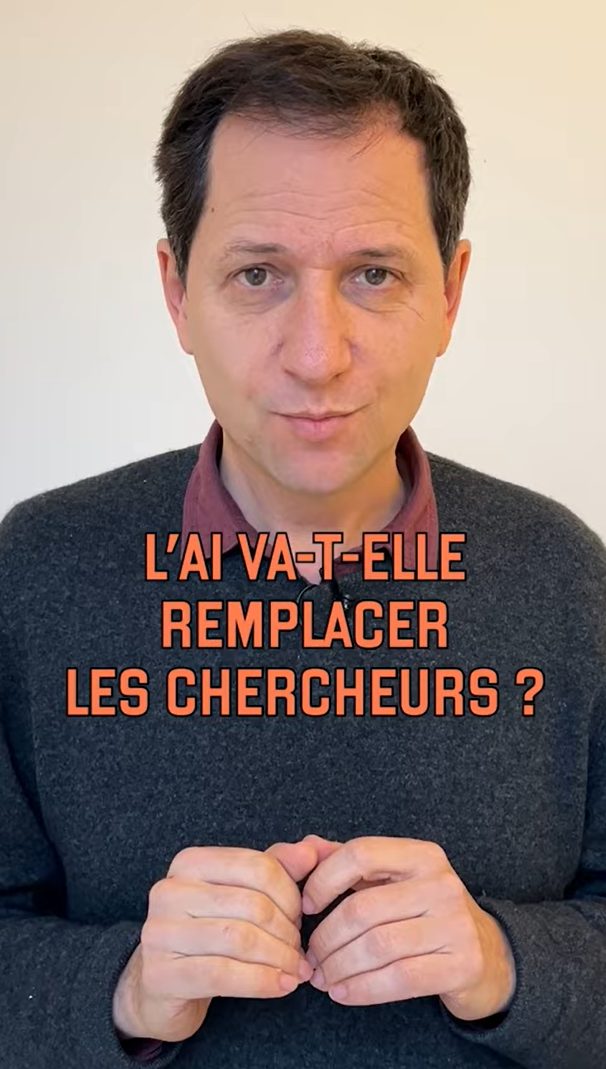
Will AI replace researchers?
By Julien Bobroff
Comprendre les lois ultimes du cosmos
By Yann Mambrini (Albin Michel / Espaces Libres – Sciences)