
#6 - JUNE 2026












Amine Ezzerouali: The resistible rise of LinkedIn experts
It is said that artificial intelligence (AI) is making experts obsolete. In fact, it has increased their number. They’re everywhere now, especially on LinkedIn, where posts thrown together by “GPT experts” are becoming increasingly prevalent. At the expense of people who have been scientifically researching AI for many years…
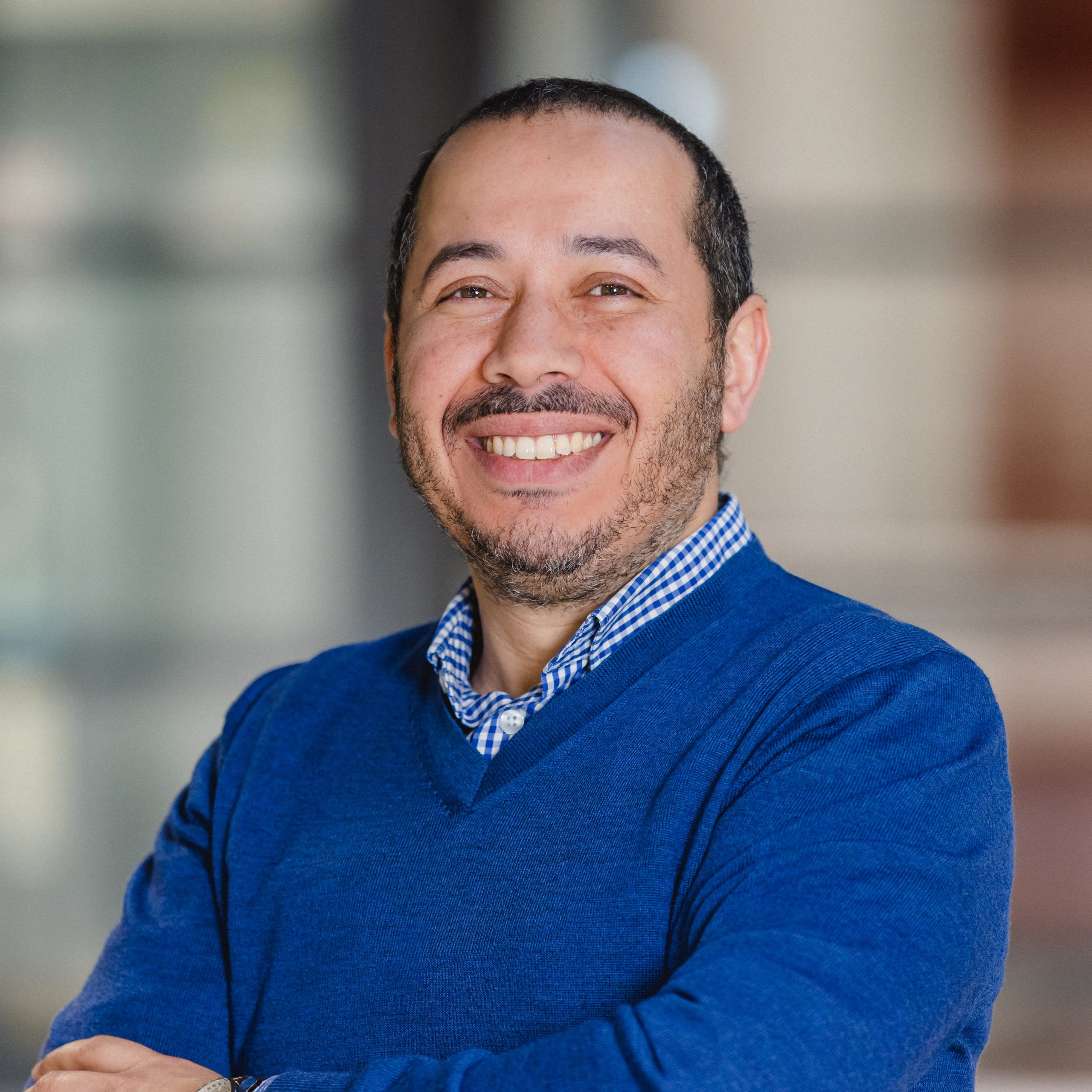
Amine Ezzerouali
Professor of Organisational Management and Programme Director of the MSc in International HR and Performance Management
SKEMA Business School
CSI: Crime Scene Investigation is a Hollywood series that has captivated hundreds of millions of fans over 16 seasons. It follows the Las Vegas Police Department’s criminalists as they examine crime scenes in search of any evidence that could help to solve cases. In each episode, the forensic experts scientifically and methodically scrutinise every detail, from DNA to fingerprints and more. It was such a success that it spawned several spin-offs: CSI: Miami, CSI: NY, CSI: Vegas and even CSI: Cyber.
EXPERTS: WHO ARE YOU?
France was not immune to this trend; the series was broadcast there under the title Les Experts, offering viewers thousands of hours of suspense, as well as an introduction to criminology and technical and technological expertise. The translation of the title is significant, as the series’ heroes are presented as specialists in their field. But were they all? No, probably not. There were not only the rookies – newcomers who were still making mistakes and learning the ropes – but also the seasoned and experienced criminalists, whose years of practice and experience on the ground made them extraordinarily efficient. If they weren’t all experts, why call them that? Was this a mistranslation? Not necessarily, as the dictionary definition of “expert” has two entries. Firstly, the adjective: an expert is someone with specialist knowledge; secondly, the noun: an expert is someone appointed to carry out an assessment. The etymology of the word “expert” refers to “experienced; having proved one’s worth”.
EXPERTS SINCE YESTERDAY
Is having specialist knowledge in a particular field, however narrow it may be, enough to make us experts? Not quite, but it’s tempting to make the leap. A perfect example of this was the emergence some years ago of a new breed of “experts”: experts in generative AI, a specialist field previously little known or completely foreign to the general public before the arrival of large language models (LLMs) and generative AI, and the breakthrough of ChatGPT. These “experts” were quick to position themselves as regards GAI. They began offering their views on the effectiveness of this form of AI, and providing recommendations and tips on how to make better use of it. Some even proposed training courses to individuals and businesses, or consultancy services to support them in implementing generative AI.
One problem immediately arose: the question of these experts’ legitimacy. For most of them, this was based on just a few months’ experience of using ChatGPT and/or other generative AI systems. Firstly, there were the seasoned AI experts, who had built up an expertise over years or even decades of work in data science and machine learning, established their legitimacy through scientific publications, and who were at the time (and still are today) mostly cautious about the “hype” and trendiness surrounding generative AI. Some were very wary and even sceptical about the emergence of what they called “pseudo-experts”. And, secondly, innumerable titles began popping all over the social media – LinkedIn being a prime example – like “GPT Expert”, “AI Expert”, “ChatGPT Expert and Trainer”, “Make your business excel with ChatGPT”, “Generative AI Expert and Lecturer”, and so on.
DECLARATION OF LEGITIMACY
These two groups of “experts” clashed over each other’s legitimacy, the former with more force than the latter, as they feared – with good reason, given the uncertainty surrounding the truthfulness and reliability of GAI-generated content – not only the dissemination of mimetic or even normative knowledge and practices (at best lacking scientific grounding and at worst erroneous and dangerous), but also the loss of their own legitimacy, built up over many years of research, experience, failures and successes. This is because experts’ legitimacy is fragile: “It can take 30 years to establish it, and a mere 30 seconds to tear it down,” as a senior executive in the tech industry recently told me. The advent of generative AI has extended this phenomenon to a number of fields: the illusion that, in theory, anyone can become an expert provided they have access to the knowledge of a natural language model via a prompt interface. Why go to the doctor when ChatGPT can diagnose you in a few seconds? Why study medicine when Gemini and Claude have detailed knowledge of diseases and their associated treatments? By extension, the widespread adoption of agent-based AI – and thus of expert, autonomous agents – would be sufficient to build up a pool of experts in every field. This is where the concept of legitimacy comes into its own. Claiming to be an expert is not enough; it is also vital to be accepted and recognised as such.
PROOFS OF TITLE
As the sociologist Mark Suchman points out (1995), legitimacy is a social construct: it is a widespread perception or assumption that an entity’s actions are desirable, proper and appropriate within a socially constructed system of norms, values, beliefs and definitions. Anyone can give their opinion, anyone can use an agent or a chatbot and anyone can claim to be an expert, but only those with a certain legitimacy will be seen in this way. In any event, going back to the CSI series, the “experts” in the programme were indeed perceived as such. They established their legitimacy with their stakeholders, demonstrated skill and competence, and were sometimes appointed to provide their “expertise” to the police and the courts. Each developed a specific skill, reflected in their title. Their legitimacy was only rarely challenged by a minority, when the opposing parties provided a second opinion. For once, the French translation of the title was actually rather good!